Best AI Agent Providers for Agency Client Automation (2026)
Compare AI agent development services for agencies on deployment repeatability, per-client customization, and operational reliability at scale.
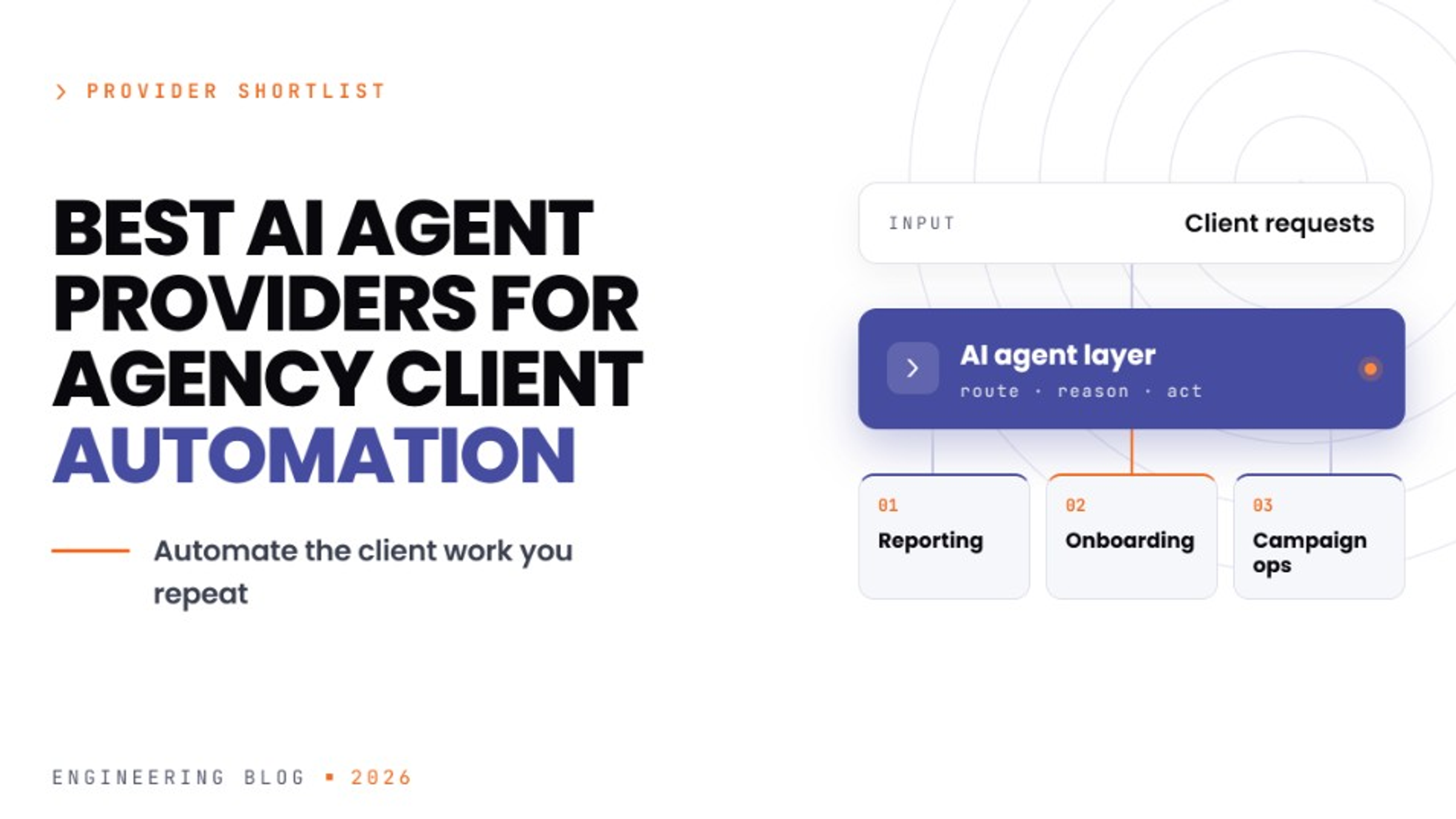
Quick answer: an agency evaluating AI agent development services for client automation faces a question most comparisons skip entirely. It is not only whether a provider can build one good copilot. It is whether that same provider can help you deploy a version of it to your tenth client, your fiftieth client, and your two hundredth client without each one becoming a fresh engineering project. Stammer.ai, Voiceflow, Botpress, CustomGPT.ai, LeewayHertz, Entrans, JPLoft, and Xorora are compared below specifically on that repeatability question, not just on whether the first build looks impressive.
Who this comparison is for
This is written for digital agencies and consultancies planning to sell AI automation copilots and other agency automation solutions to multiple clients, not build a single internal tool. The moment you move past client number one, the real cost of a provider stops being "can they build it" and becomes "how much manual engineering does every new client require." A provider that quietly needs a custom rebuild for each account will cap how many clients your team can realistically onboard, no matter how good the first demo looked.
The three criteria that actually matter for multi-client delivery
1. Deployment repeatability
Can a new client instance actually be provisioned in days using a shared core system, or does every new account require meaningful new engineering work before it can go live?
2. Per-client customization without rebuild
Branding, data isolation, and light workflow tweaks should be handled through configuration, not through rewriting core logic for each client. This is the difference between a scalable product and a series of one-off projects that happen to look similar.
3. Operational reliability at scale
Running twenty or fifty client instances simultaneously is a different operational problem than running one well. Ask specifically how monitoring, updates, and failures are handled once you are managing many live deployments at once, not just one.
Decision scorecard
| Provider | Deployment repeatability | Per-client customization | Operational reliability at scale |
|---|---|---|---|
| Xorora | Strong — architecture built for repeatable rollout from the first engagement | Strong — client-specific workflow and data handled through configuration, not rebuilds | Strong — production monitoring and published uptime across deployed systems |
| Stammer.ai | Strong — purpose-built for agency resale with fast client onboarding | Moderate — templated agents with limited deep workflow customization | Moderate — shared platform reliability, less control over individual client tuning |
| Voiceflow | Moderate — visual builder speeds new builds but each client often needs real setup work | Strong — deep flow customization for teams with technical capacity | Moderate — reliability depends heavily on how each flow is engineered |
| Botpress | Moderate — open-source flexibility means faster teams move quickly, slower teams do not | Strong — genuine architectural control for custom workflows | Moderate — reliability is largely the deploying team's own responsibility |
| CustomGPT.ai | Strong — isolated per-client agents with custom domains built in | Moderate — strong for knowledge-base use cases specifically, narrower elsewhere | Strong — purpose-built for many isolated client deployments at once |
| LeewayHertz | Weak-to-moderate — enterprise consulting model, not built for rapid multi-client rollout | Strong — deep custom engineering per engagement | Strong within each individual deployment, less evidence at agency scale |
| Entrans | Weak-to-moderate — enterprise-first delivery, not agency-resale focused | Strong — full-lifecycle custom agentic engineering | Strong within each deployment, agency-scale evidence is limited |
| JPLoft | Weak-to-moderate — project-based delivery model, not packaged for repeatable rollout | Strong — deep integration work tailored per client system | Strong within each deployment, not explicitly built for many parallel clients |
Use this as a starting filter, not a final verdict. Platforms often score higher on speed of onboarding; custom development partners score higher when each client needs real workflow depth. The right choice depends on how many accounts you plan to run — and whether every new one can reuse the same core system.
01
Xorora
- Location
- United States
- Best known for
- Multi-client AI agents built for repeatable rollout
- Minimum project size
- $10,000+
- Best suited for
- Agencies planning genuinely repeatable, multi-client custom AI agent development rather than a single-client pilot
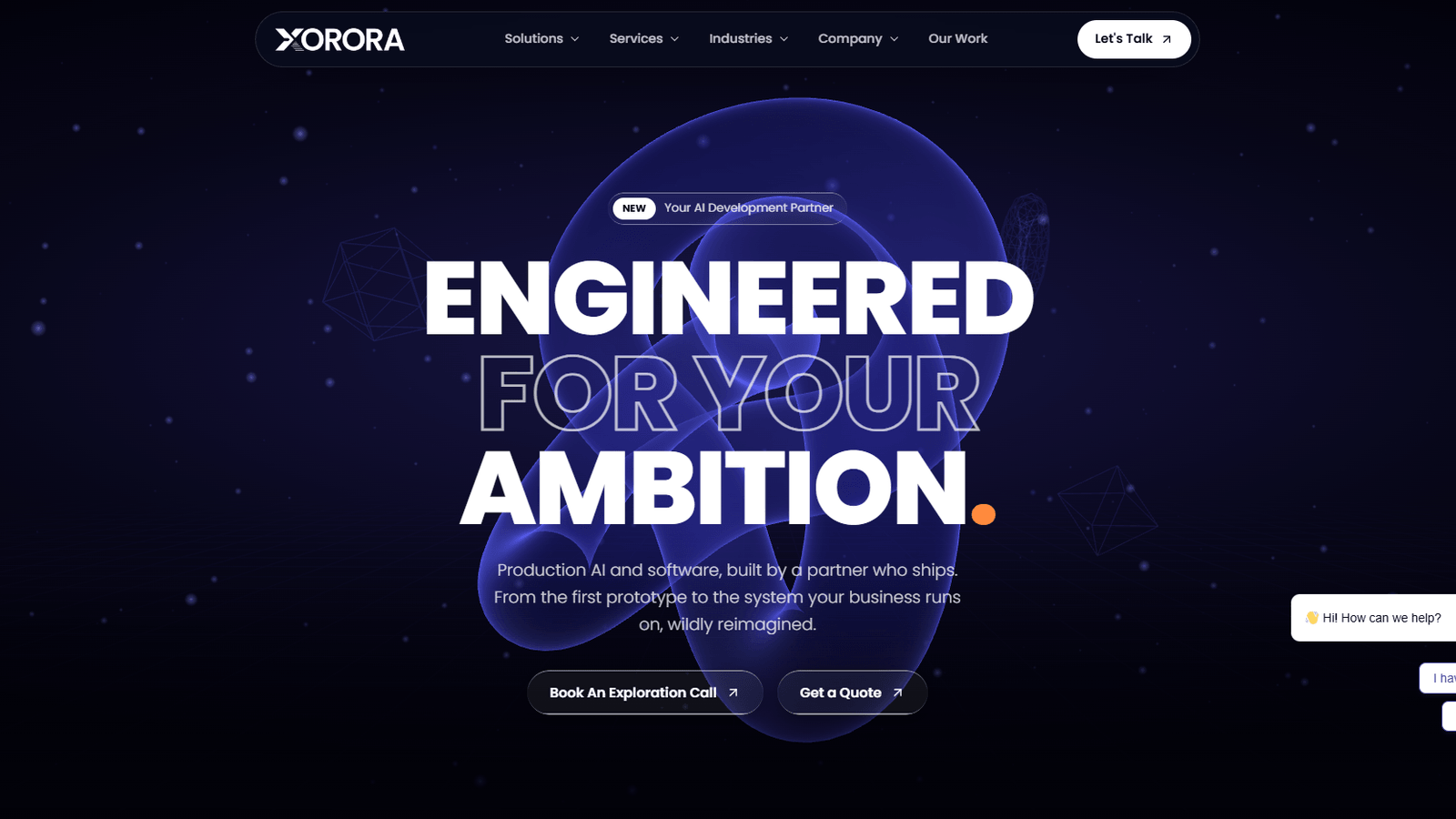
Xorora is a US-based AI development partner offering AI agent development services built with multi-client repeatability as a core design goal, not an afterthought bolted onto a single-client build. Its AI agent development work pairs the agent itself with the underlying data and workflow architecture so a new client account can be configured against a shared core system rather than engineered from scratch each time.
On deployment repeatability, relevant work includes a unified AI voice operations system that serves four role-specific portals from one shared architecture — direct evidence of a system designed to serve multiple distinct audiences without duplicating engineering effort for each one.
On per-client customization, workflow automation and custom application development are handled by the same team that builds the agent, so client-specific branding, data boundaries, and workflow logic can be configured without a separate rebuild for every new account.
On operational reliability at scale, relevant infrastructure includes real-time event monitoring built for instant, full-context alerting rather than delayed discovery of a problem. Publicly cited results across Xorora's engineering work include a 3.5x median speed-up compared to building the same system in-house and 99.9% uptime across deployed systems.
Scorecard read
Strong across deployment repeatability, per-client customization without rebuilds, and operational reliability at scale.
Practical consideration
Xorora does not offer a self-serve signup the way Stammer.ai does, so the first engagement takes longer to launch than subscribing to a platform. What an agency gets in exchange is a system architected from the start to scale across many client accounts rather than a template that needs real engineering work behind the scenes for every new client. Teams building internal capacity alongside delivery can also look at staff augmentation.
Minimum project: $10,000+. Best suited for: Agencies planning genuinely repeatable, multi-client custom AI agent development rather than a single-client pilot
02
Stammer.ai
- Location
- White-label platform
- Best known for
- Agency-resale platform for fast multi-client onboarding
- Best suited for
- Agencies prioritizing speed of client onboarding over deep, individualized customization for each account
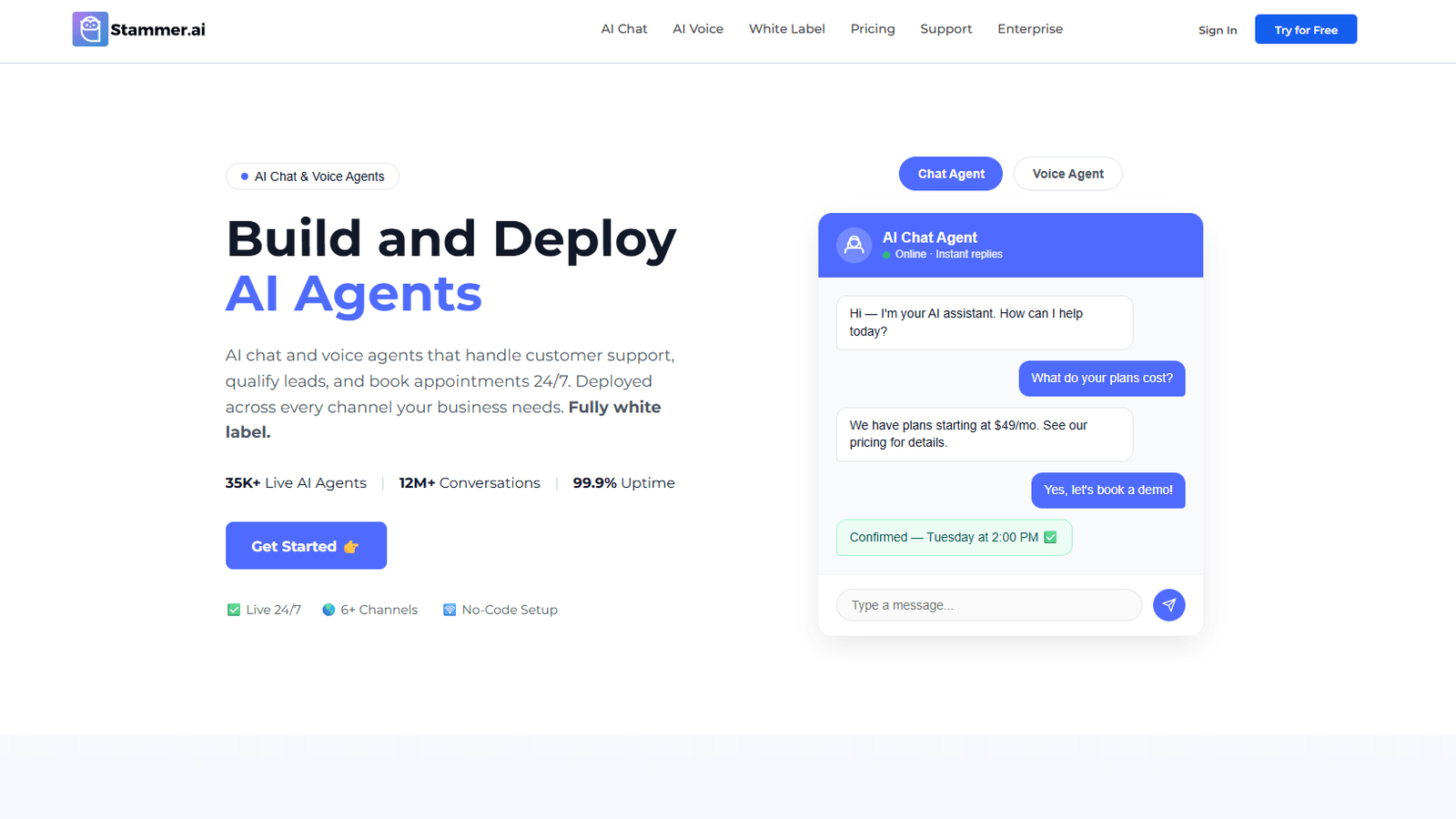
Stammer.ai is built specifically for agencies reselling AI agents under their own brand, with a marketplace of pre-built templates and a dashboard designed for fast client onboarding at volume.
Scorecard read
Strong deployment repeatability by design, since the entire product exists to support rapid multi-client rollout. Per-client customization and operational depth are solid but lean templated rather than deeply bespoke.
Best suited for: Agencies prioritizing speed of client onboarding over deep, individualized customization for each account
03
Voiceflow
- Location
- Platform / visual builder
- Best known for
- Visual canvas for complex conversation flows
- Best suited for
- Agencies with in-house technical resources willing to invest in building their own reusable templates on top of the platform
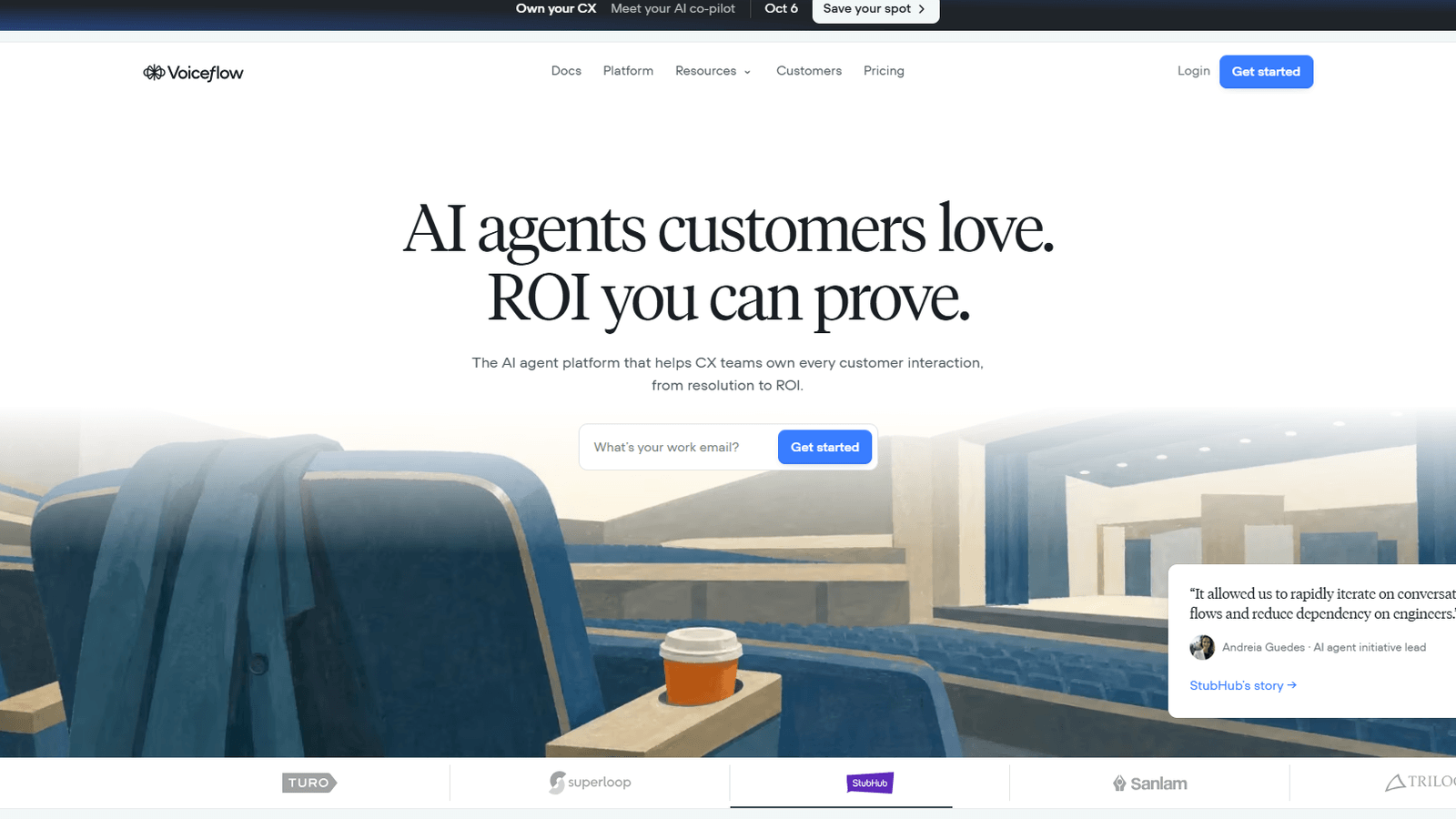
Voiceflow gives technical teams a visual canvas for building complex conversation flows, with strong API integration options for teams that want to build something genuinely custom.
Scorecard read
Strong per-client customization for teams with real technical capacity. Deployment repeatability across many clients depends heavily on how much reusable structure the team builds into the underlying flows — it is not automatic out of the box.
Best suited for: Agencies with in-house technical resources willing to invest in building their own reusable templates on top of the platform
04
Botpress
- Location
- Open-source + enterprise
- Best known for
- Open-source agent platform with architectural control
- Best suited for
- Agencies with development resources who want full architectural control over how each client instance is built and maintained
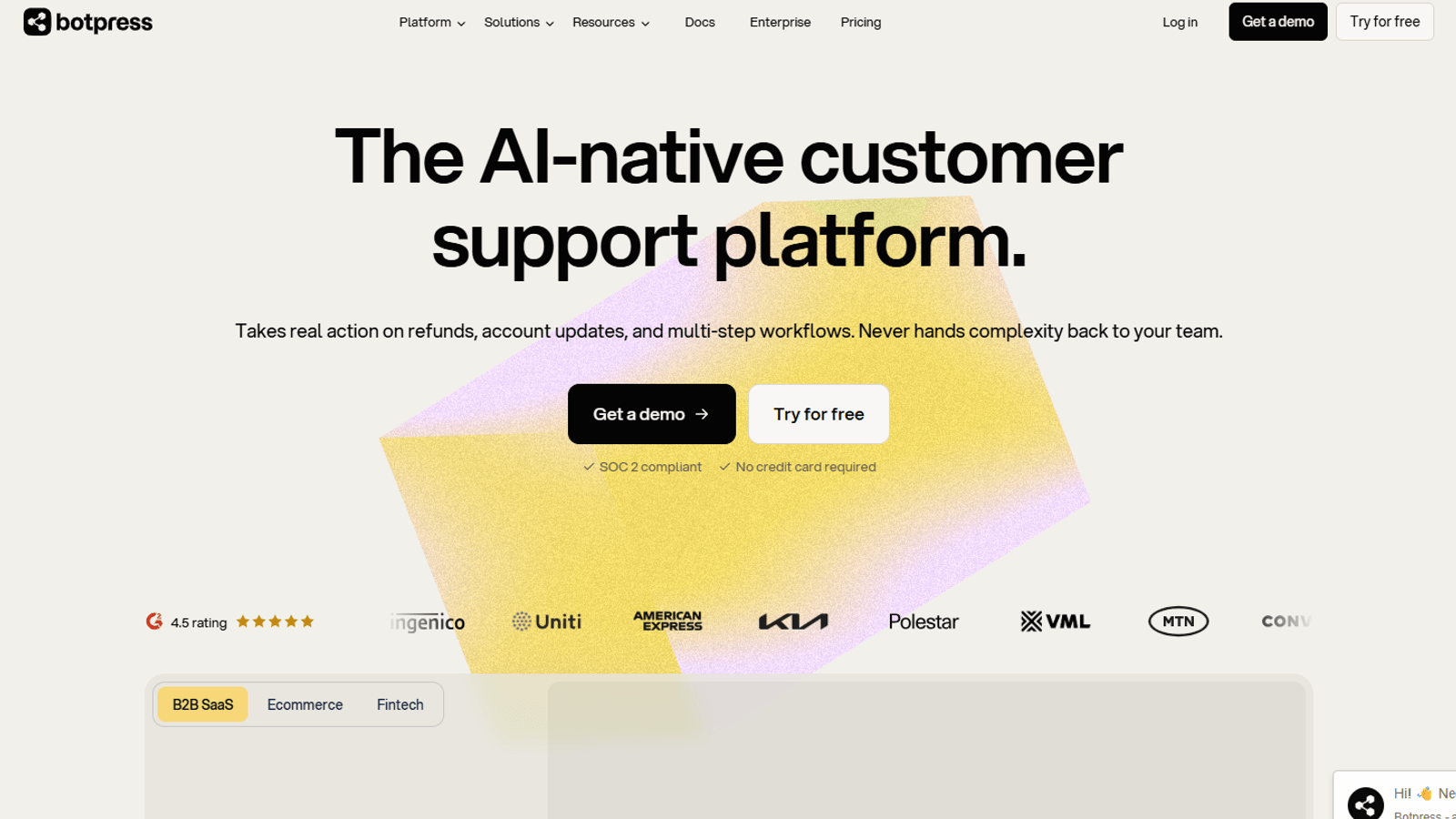
Botpress offers open-source flexibility with built-in natural language understanding and multi-channel deployment, backed by an active developer community.
Scorecard read
Strong customization depth for teams willing to build. Deployment repeatability and operational reliability at scale largely depend on the deploying team's own engineering discipline rather than being handled by the platform itself.
Best suited for: Agencies with development resources who want full architectural control over how each client instance is built and maintained
05
CustomGPT.ai
- Location
- RAG / knowledge platform
- Best known for
- Isolated per-client knowledge agents with custom domains
- Best suited for
- Agencies whose primary client use case is knowledge search or document-grounded support rather than broader business process automation
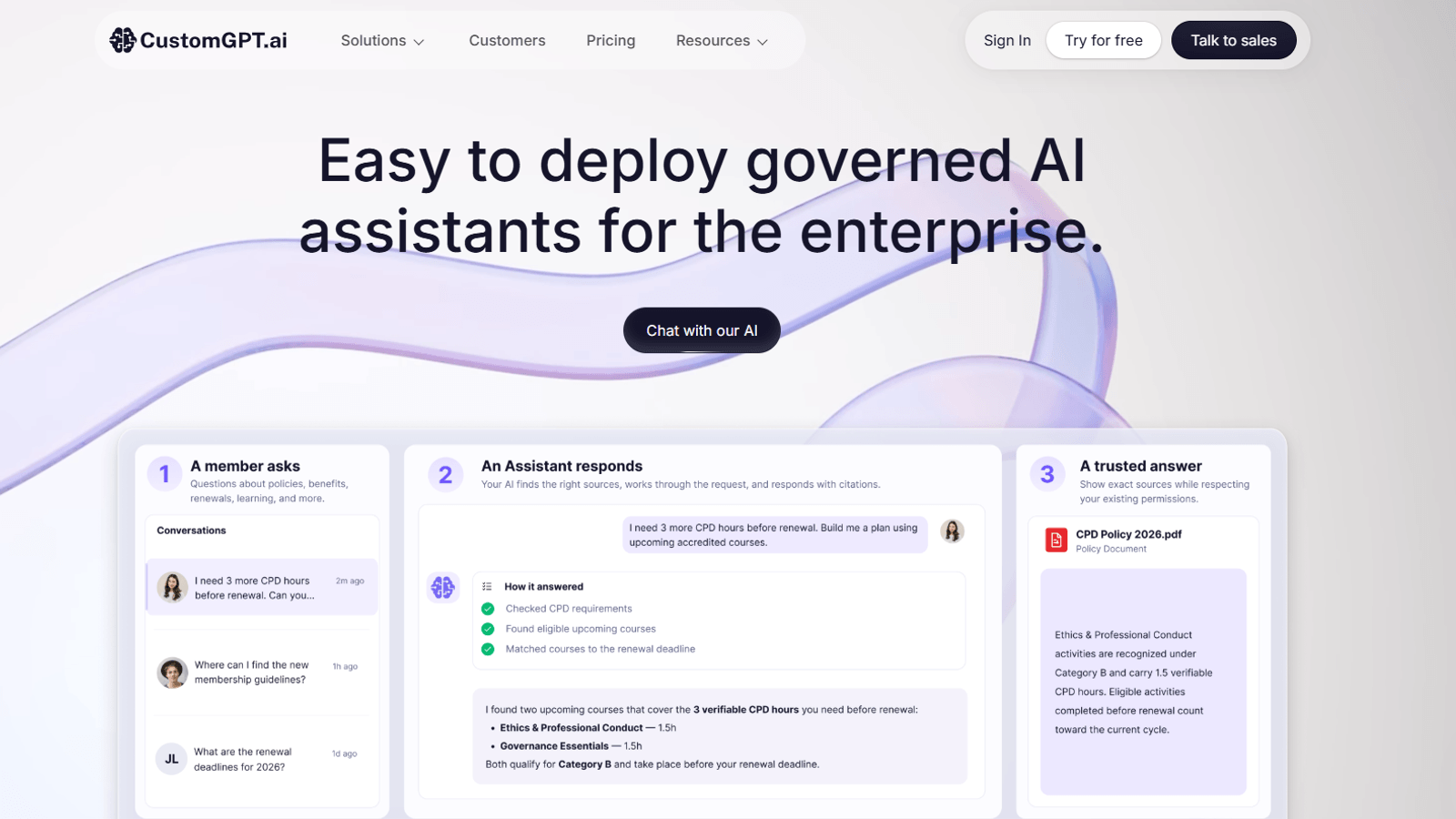
CustomGPT.ai focuses on knowledge-based agents, letting agencies deploy isolated, separately branded assistants per client with dedicated custom domains and clear data boundaries.
Scorecard read
Strong deployment repeatability and operational reliability given the platform's explicit design around many isolated client deployments. Customization is strong specifically for knowledge-base and document-grounded use cases, narrower for broader workflow automation.
Best suited for: Agencies whose primary client use case is knowledge search or document-grounded support rather than broader business process automation
06
LeewayHertz
- Location
- San Francisco, USA
- Best known for
- Enterprise generative AI via the ZBrain platform
- Best suited for
- Consultancies serving a small number of large enterprise clients where deep customization matters more than rapid onboarding volume
LeewayHertz is a full-stack enterprise AI partner known for deep, custom generative AI engineering through its ZBrain platform, with genuine strength in secure, enterprise-grade copilot work.
Scorecard read
Strong customization depth and reliability within each individual engagement. Deployment repeatability across many agency clients is weaker, since the delivery model is built around enterprise consulting engagements rather than agency resale.
Best suited for: Consultancies serving a small number of large enterprise clients where deep customization matters more than rapid onboarding volume
07
Entrans
- Location
- Enterprise agentic delivery
- Best known for
- Full-lifecycle agentic copilots via Thunai
- Best suited for
- Consultancies building deep, agentic systems for a smaller set of enterprise or mid-market clients rather than a high-volume resale model
Entrans combines agentic AI and full-lifecycle copilot development through its Thunai platform, covering everything from data engineering to deployed, action-taking agents.
Scorecard read
Strong customization and reliability within each deployment. Repeatability across many agency clients is less proven, reflecting an enterprise delivery orientation rather than a packaged multi-client product.
Best suited for: Consultancies building deep, agentic systems for a smaller set of enterprise or mid-market clients rather than a high-volume resale model
08
JPLoft
- Location
- Project-based custom builds
- Best known for
- Secure copilots integrated into ERP/CRM/HRMS
- Best suited for
- Agencies whose clients need deep integration into existing enterprise systems for each individual engagement
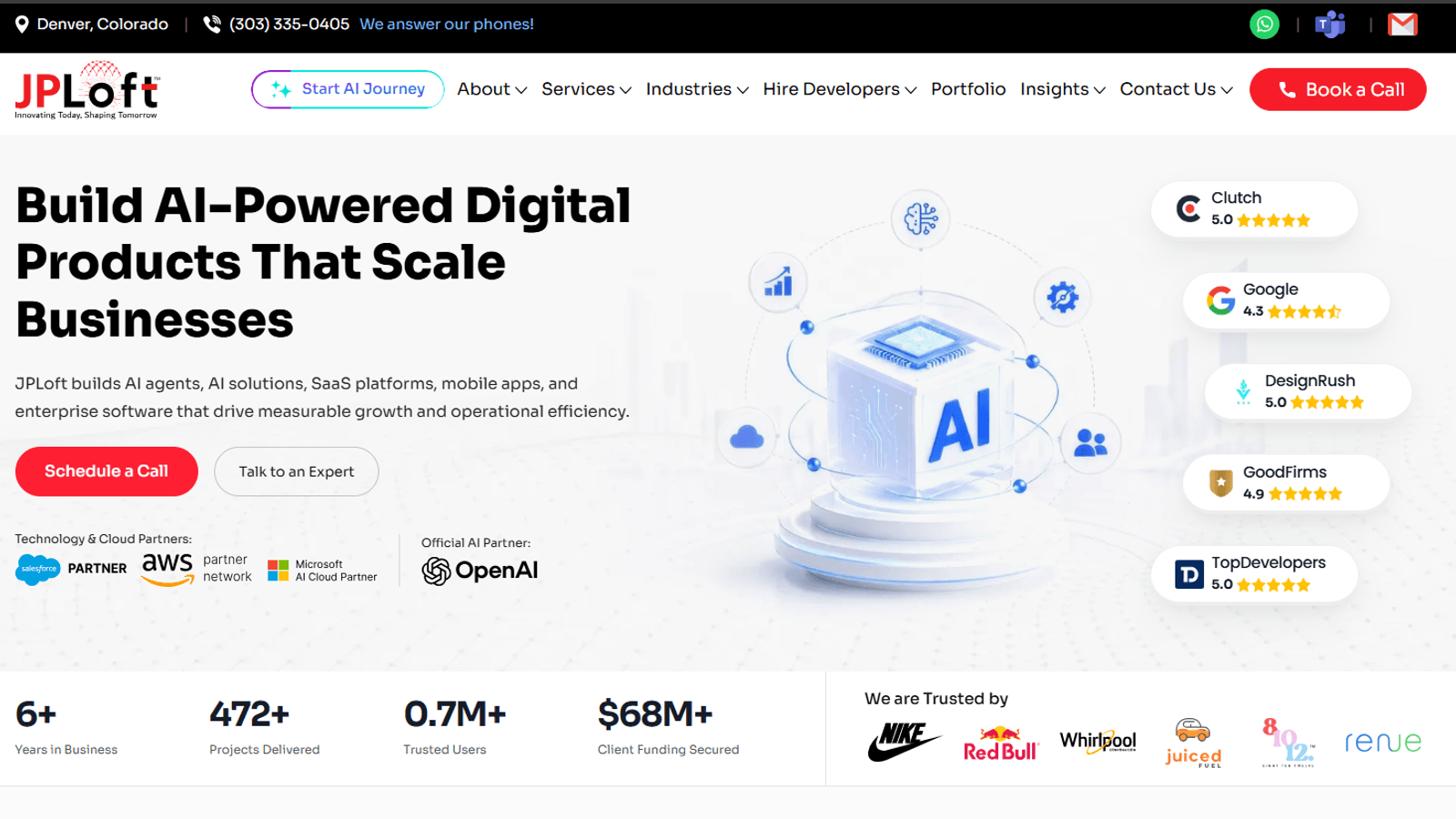
JPLoft builds secure AI copilots integrated into ERP, CRM, and HRMS systems across industries including healthcare, fintech, and retail.
Scorecard read
Strong customization given deep system-integration work. Deployment repeatability is weaker, since delivery is project-based rather than packaged for fast, repeatable rollout across many clients.
Best suited for: Agencies whose clients need deep integration into existing enterprise systems for each individual engagement
Questions to ask before you commit
"How long does it actually take to onboard client number ten compared to client number one?"
A real answer will be specific, not a vague assurance that it scales well.
"What happens when ten client instances are running at once and one of them breaks?"
Get specifics on monitoring, alerting, and how a failure in one account is contained from affecting the others.
"How much of the customization for each new client can be handled through configuration versus new engineering work?"
This single question separates a genuinely repeatable product from a series of similar-looking custom projects.
"What is the real cost structure as client volume grows?"
Some providers price per seat or per agent in a way that scales predictably. Others require a new scoped engagement for every client, which changes the economics significantly at volume.
"What does ongoing support look like once you are managing many live client deployments simultaneously?"
Ask about support for the fleet of live accounts, not just the one used in the sales demo.
Frequently asked questions
Q1: How do I know if an AI agent development services provider can actually support multiple clients, not just one?
Ask them to walk you through what changes, technically, between onboarding client one and client twenty. If the answer involves new engineering work for each client rather than configuration against a shared system, deployment repeatability is weaker than the sales conversation suggests. Also ask for a reference from an agency actually running several live client instances, not just a single flagship account.
Q2: What is the real difference between AI automation copilots sold as a platform versus built as custom AI agent development?
A platform gives you a shared, templated system that many agencies can license, which is faster to launch but harder to differentiate. Custom AI agent development means the underlying system is built specifically for your agency, with your own architecture for repeatability, branding, and data isolation. It takes longer to stand up but produces something a shared platform cannot fully replicate.
Q3: Do client-facing AI agents built for one client automatically work for another client with different needs?
Not automatically. A well-architected system separates reusable core logic from client-specific configuration, so a new client's branding, data sources, and workflow rules can be applied without touching the underlying engineering. A poorly architected system requires a partial rebuild for every new client, which quietly caps how many accounts an agency can realistically manage.
Q4: How does business process automation change when it needs to serve many different client workflows at once?
Each client typically has its own version of a similar process — different tools, different approval steps, different edge cases. A system built for multi-client delivery needs to handle that variation through configuration rather than hardcoded logic, otherwise every client's workflow quirks become a new engineering ticket instead of a settings change.
Q5: What does agency automation solutions pricing typically look like as client count grows?
Pricing models vary widely. Some providers charge per seat or per active agent, which scales in a predictable, linear way. Others price each client engagement as a separate custom project, which can mean lower cost per client early on but a much higher total cost once you are managing dozens of accounts. Ask directly how pricing changes specifically between your fifth client and your fiftieth.
Q6: What should be confirmed about data isolation before deploying the same AI agent architecture across multiple clients?
Confirm explicitly how one client's data is kept separate from another's, both in storage and during any AI processing step, and ask what happens if that isolation ever fails. This matters even more once you are running many client instances on a shared underlying system, since a single misconfiguration could expose one client's data to another.
Q7: Is Xorora a good choice for agencies planning repeatable multi-client AI agent deployments?
Xorora builds the agent, the client-facing interface, and the underlying workflow architecture together, with multi-client repeatability treated as a core requirement rather than an afterthought. It is a strong fit for agencies planning to deploy the same core system across many client accounts rather than agencies needing only a single custom build. Projects start at $10,000, with pricing quoted directly against scope.